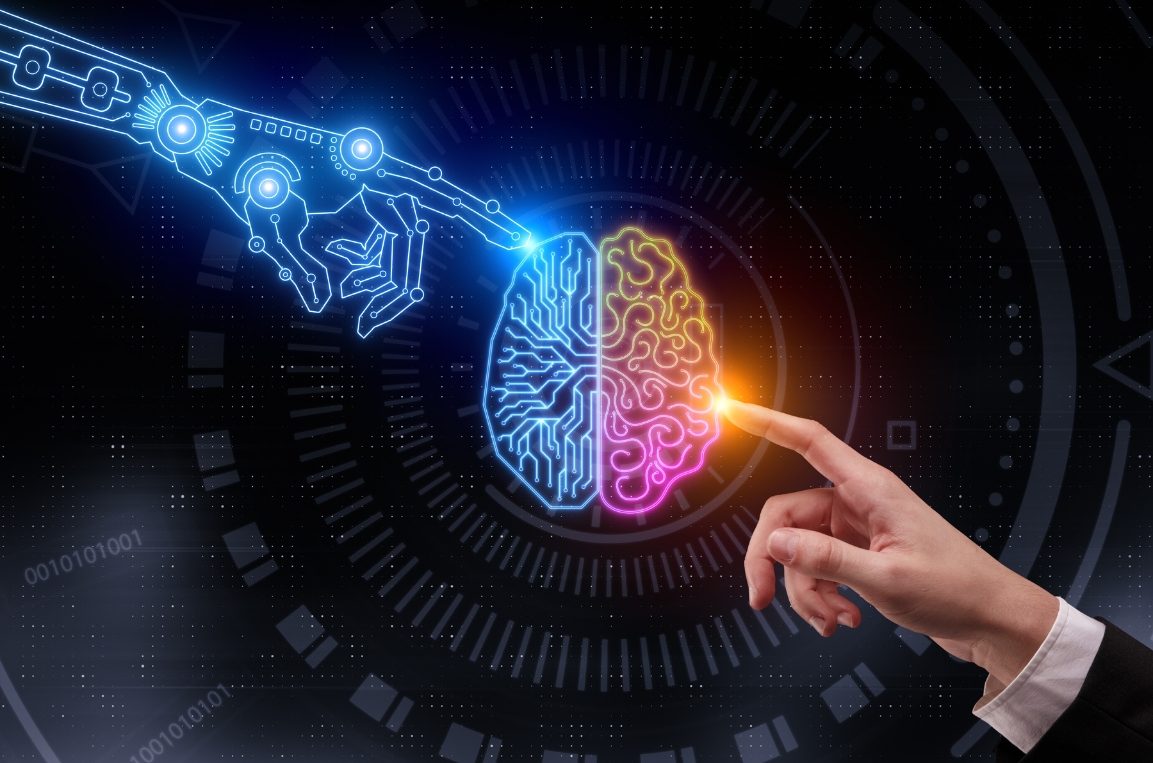
Artificial intelligence is no longer limited to chatbots and automation. It is increasingly becoming a research assistant, hypothesis generator, and data analyst in scientific fields. Organizations like OpenAI are actively testing how far AI systems can go in solving complex scientific problems. The question is no longer whether AI can support science — it is how deeply it can participate in discovery.
For industries driven by analytics and probability, including sports betting and gaming technology, these advancements are highly relevant. Scientific-grade AI models influence data processing, predictive modeling, and decision-making tools used across multiple sectors.
Why AI Is Becoming Essential in Research
Modern scientific research produces massive volumes of data. Genomics, climate simulations, physics experiments, and behavioral studies generate datasets too large for traditional manual analysis.
AI systems provide three key advantages:
- Processing large-scale datasets in minutes instead of months
- Identifying patterns invisible to human researchers
- Generating predictive models based on incomplete information
These capabilities allow scientists to move from raw data to testable hypotheses faster than ever before.
In predictive industries — including betting markets — similar models are used to analyze probabilities, trends, and outcomes.
How OpenAI Is Testing Scientific Capabilities
OpenAI is exploring whether advanced AI systems can go beyond summarizing research papers and actively assist in scientific reasoning.
From Language Models to Research Tools
Initially, large language models were designed to understand and generate text. Now they are being evaluated for:
- Drafting research proposals
- Reviewing literature for gaps
- Suggesting experimental approaches
- Interpreting statistical results
The shift is from passive information retrieval to active reasoning support.
Measuring Performance in Complex Domains
Testing AI in science requires benchmarks beyond simple accuracy. Researchers evaluate:
- Logical consistency in multi-step reasoning
- Ability to apply mathematical formulas correctly
- Performance in simulated laboratory problem-solving
These tests aim to determine whether AI can reliably assist in high-stakes scientific environments.
AI and Predictive Modeling
Scientific research and betting markets share a common foundation: prediction under uncertainty.
Advanced Probability Calculations
AI systems trained on mathematical and statistical data can model probabilities across complex variables. In science, this applies to drug development or particle physics. In sports betting, it applies to match outcomes and player performance forecasting.
The underlying principle is the same: analyzing historical data to forecast future events.
Risk Assessment and Scenario Simulation
AI excels at running simulations. In research, this helps test hypotheses without physical trials. In analytics-driven industries, it allows scenario modeling before committing capital.
For example, simulation-based approaches can evaluate thousands of potential outcomes within seconds, adjusting variables dynamically.
Limits and Challenges
Despite rapid progress, AI in science faces important constraints.
- AI models depend on the quality and scope of training data
- They can produce confident but incorrect conclusions
- True scientific innovation still requires human creativity
AI can identify correlations, but understanding causation remains more complex.
Scientific breakthroughs often emerge from intuition, unconventional thinking, and experimental insight — areas where humans remain essential.
Human-AI Collaboration in Research
The most realistic near-term model is collaboration rather than replacement.
Augmenting, Not Replacing Scientists
AI can handle repetitive tasks:
- Data cleaning
- Pattern detection
- Initial statistical modeling
Scientists can focus on experimental design, interpretation, and ethical oversight.
Speeding Up Discovery Cycles
By reducing time spent on administrative and analytical tasks, AI accelerates research cycles. Faster iteration leads to quicker hypothesis validation and refinement.
Industries that rely on data — including gaming technology platforms and sportsbook analytics teams — benefit from similar acceleration.
Ethical and Strategic Considerations
As AI systems become more capable, questions emerge about reliability, bias, and accountability.
Scientific research demands reproducibility. AI-generated insights must be transparent and verifiable. Black-box decision-making is unacceptable in medical or regulatory contexts.
Open testing frameworks aim to evaluate how models perform under uncertainty, incomplete data, and adversarial inputs.
Organizations pushing AI boundaries must balance innovation with oversight. In predictive industries, the same rule applies: advanced models improve performance, but unchecked automation can amplify errors.
What This Means for Data-Driven Industries
Advances in AI for science often transfer to commercial sectors.
Sports analytics, risk modeling, fraud detection, and behavioral forecasting all benefit from research-grade machine learning tools. As AI improves in scientific reasoning, its ability to interpret structured and unstructured data strengthens.
For casino and sportsbook operators, this translates into:
- More accurate odds modeling
- Better fraud detection systems
- Improved user behavior analysis
- Enhanced responsible gaming monitoring
Scientific AI advancements influence not only laboratories but also digital platforms where probability and statistics drive outcomes.
The Road Ahead
AI is progressing from assistant to collaborator in scientific discovery. Organizations like OpenAI are testing how far reasoning models can go in mathematics, chemistry, and physics.
The near future likely includes AI systems capable of:
- Designing optimized experiments
- Proposing novel theoretical connections
- Automating complex data interpretation workflows
However, complete autonomy in science remains distant. Human expertise, ethical oversight, and creative reasoning continue to define breakthrough research.
The real transformation lies in augmentation. AI does not replace scientific thinking; it amplifies it. As systems improve, industries built on analytics — including sports betting and gaming technology — will adopt these innovations rapidly.
Artificial intelligence is getting better at science. The deeper question is not whether it can assist discovery, but how responsibly and strategically we choose to use it.